Destination · Cardamom Hills
Thekkady
Kerala · around 900 m · Two nights — a boat slot, a plantation and time in Kumily.
About Thekkady
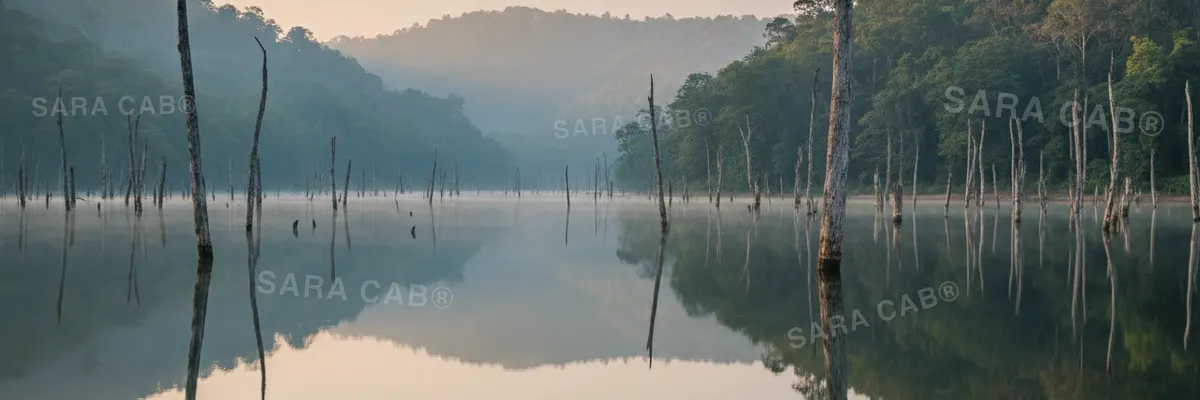
Periyar lake is not natural. It was created in the 1890s when the British dammed the Periyar river to divert water east into Tamil Nadu, flooding a forested valley. The bleached tree trunks standing in the shallows are the remains of that forest, and they are why the lake looks the way it does.
The reserve around it is one of the few places in India where wildlife viewing is done from a boat rather than a jeep, which suits some groups and disappoints others. It is quieter and less intrusive; it is also further from the animals, and sightings are of a shoreline rather than a clearing.
Kumily, just outside the reserve, is spice country — cardamom, pepper, vanilla and clove — and the plantation tours are a genuine part of the trip rather than a filler. The working estates are considerably better than the roadside operations near the town, and the difference is larger than you would expect.
Staying there
Accommodation runs from resorts along the reserve edge to homestays in the plantations around Kumily. Approaches vary from surfaced drives to narrow tracks, so the property name is worth sending us at booking.
Kumily itself has the market, the restaurants and the spice shops, and staying close to it means being able to walk to dinner. Properties deeper in the plantations are quieter and make the vehicle essential.
Worth your time
- Periyar Tiger Reserve boat safari
- Spice plantation tours
- Bamboo rafting
- Kumily spice market
- Vandanmedu cardamom auctions
- Mangala Devi temple
| Region | Cardamom Hills, Kerala |
|---|---|
| Altitude | Around 900 m |
| Best season | September to March for comfort and for wildlife on the lake shoreline. |
| Suggested stay | Two nights — a boat slot, a plantation and time in Kumily. |
Getting there
Routes to Thekkady
Each route guide covers the real drive time, which seater we would send, the itinerary, permits and the questions people actually ask about that approach.
Multi-day
Circuits including Thekkady
What it costs
| Seater | Configuration | From, per km | Driver batta / day | Minimum / day |
|---|---|---|---|---|
| 10 Seater | 9+D — up to 9 passengers | ₹38 | ₹1,000 | 300 km |
| 13 Seater | 12+D — up to 12 passengers | ₹42 | ₹1,000 | 300 km |
| 17 Seater | 16+D — up to 16 passengers | ₹45 | ₹1,000 | 300 km |
Fares shown are indicative starting rates. The final charge is based on real-time usage — distance, hours or days, tolls, parking and permits. Outstation trips are charged on a minimum of 300 km per day. Driver batta is ₹1,000 per day; late-night batta of ₹1,000 applies between 22:00–05:59. GST at 5% applies to the total.
Questions about Thekkady
Is the lake natural?
No. It was created in the 1890s when the British dammed the Periyar river to divert water east into Tamil Nadu, flooding a forested valley. The bleached trunks standing in the shallows are the remains of that forest.
How does the safari work?
From a boat on the lake, run by the forest department, rather than in jeeps. Slots are at fixed times morning and afternoon and they fill during holidays. Private vehicles do not enter the reserve.
How does boat viewing compare with a jeep safari?
Quieter and less intrusive, and further from the animals. You are watching a shoreline rather than a clearing. It suits some groups and disappoints those expecting a Bandipur-style safari.
Do we need a permit to get there?
Yes, a Kerala interstate commercial permit if you are coming from Tamil Nadu or Karnataka, obtained before dispatch and charged at actuals with the receipt.
Are the spice plantation tours worth it?
The working estates are, and the roadside operations near Kumily generally are not. It is one of the few things where the gap between the good version and the tourist version is large. Ask us and we will point you at the former.
How many days do we need?
Two nights — enough for a boat slot, a plantation and time in Kumily. One night means arriving, sleeping and leaving.
When is the best time?
September to March for comfort and for wildlife on the shoreline. The monsoon is heavy here and the ghat runs in cloud, though the forest is at its most spectacular then.
Will we see wildlife?
Possibly. The shoreline draws animals to drink, which is why the boat runs at dawn and late afternoon. Elephants and gaur are seen regularly; anything more is luck.
Can we combine it with Munnar?
Yes, it is the classic Kerala pairing — but it is a real drive through the hills rather than a short hop. Allow the best part of a day between them and plan three or four nights for both.
Is bamboo rafting worth doing?
For groups who want to be in the forest rather than looking at it, yes. It is a long day starting early, run by the forest department, and it needs booking ahead. It is not suitable for everyone in a mixed group.
Destination information last verified 2026-09-02.