Destination · Hoysala heartland
Belur & Halebidu
Karnataka · A day trip from Mysore or Bangalore; a night at Hassan if adding Shravanabelagola.
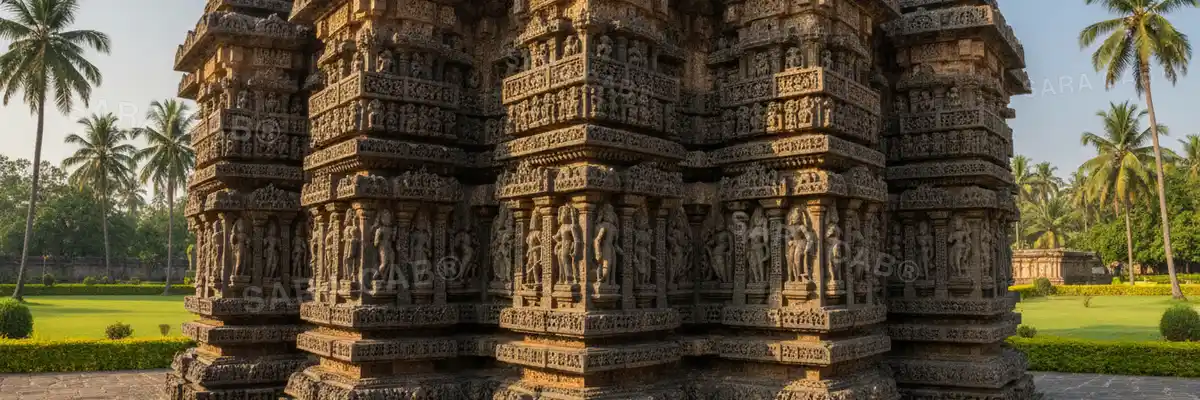
About Belur & Halebidu
The Hoysalas ruled this part of Karnataka from the eleventh to the fourteenth century, and their temples are the finest carving in South India. The reason is material: they worked in chloritic schist, a soapstone that is soft enough to be worked like wood when freshly quarried and hardens on exposure. Granite could never have held detail this fine.
Belur's Chennakeshava temple took over a century to complete and is still in active worship, which gives it a different atmosphere from a monument. Halebidu's Hoysaleswara is larger and was never finished — the Delhi Sultanate sacked the capital in the fourteenth century and work stopped — so it shows the process in a way completed buildings cannot.
The two sit sixteen kilometres apart, which is why seeing both is a comfortable day rather than a choice. Many of the sculptors signed their work, which is unusual for the period and means individual hands can be traced across both sites.
Staying there
Most groups visit as a day trip from Mysuru or Bengaluru rather than staying. Hassan, the nearest town of any size, has functional hotels and is the sensible base if you are adding Shravanabelagola.
Both temple sites have their own parking a short walk from the entrances, and neither is congested outside festival days.
Worth your time
- Chennakeshava temple, Belur
- Hoysaleswara temple, Halebidu
- Kedareshwara temple
- Archaeological museum at Halebidu
- Shravanabelagola nearby
- Hassan
| Region | Hoysala heartland, Karnataka |
|---|---|
| Best season | October to March. The sites are open with limited shade and the carving rewards standing still. |
| Suggested stay | A day trip from Mysore or Bangalore; a night at Hassan if adding Shravanabelagola. |
Getting there
Routes to Belur & Halebidu
Each route guide covers the real drive time, which seater we would send, the itinerary, permits and the questions people actually ask about that approach.
Multi-day
Circuits including Belur & Halebidu
What it costs
| Seater | Configuration | From, per km | Driver batta / day | Minimum / day |
|---|---|---|---|---|
| 10 Seater | 9+D — up to 9 passengers | ₹38 | ₹1,000 | 300 km |
| 13 Seater | 12+D — up to 12 passengers | ₹42 | ₹1,000 | 300 km |
| 17 Seater | 16+D — up to 16 passengers | ₹45 | ₹1,000 | 300 km |
Fares shown are indicative starting rates. The final charge is based on real-time usage — distance, hours or days, tolls, parking and permits. Outstation trips are charged on a minimum of 300 km per day. Driver batta is ₹1,000 per day; late-night batta of ₹1,000 applies between 22:00–05:59. GST at 5% applies to the total.
Questions about Belur & Halebidu
Why is the carving so fine?
Because the Hoysalas worked in chloritic schist, a soapstone soft enough to be worked almost like wood when freshly quarried, which hardens on exposure. Granite could never have held detail at this level.
Which is better, Belur or Halebidu?
Belur's Chennakeshava is finer and still in active worship, which gives it a different atmosphere. Halebidu's Hoysaleswara is larger and unfinished, which shows the process. Most people prefer Belur and most are glad they saw both.
Why was Halebidu never finished?
The Delhi Sultanate sacked the Hoysala capital in the fourteenth century and work stopped. What survives is a building caught mid-process, which is part of what makes it interesting rather than merely incomplete.
Can we see both in one day?
Comfortably. They are sixteen kilometres apart, so the local driving between them is short. From Mysuru or Bengaluru it is a full but unhurried day.
Is a guide worth it?
Very much so, and we say that as the transport rather than as anyone with an interest. The carving is dense with narrative that is invisible without one. We do not arrange guides or take a commission.
Did the sculptors sign their work?
Many did, which is unusual for the period, and individual hands can be traced across both sites. It is one of the things a guide will show you that you would never find alone.
Should we add Shravanabelagola?
It is a different proposition — a substantial stepped climb, barefoot on bare rock, to a monolithic statue at the summit. Worth doing, and not something to add casually on a hot afternoon.
Do we need a permit?
No. Both sites are in Karnataka and the approaches from Mysuru or Bengaluru cross no state line. Tolls are charged at actuals.
When is the best time to visit?
October to March. The sites are open with limited shade, and the carving rewards standing still and looking rather than walking a quick circuit, which is hard work in the heat.
Is there much walking?
Moderate at both temples, on level ground, which makes this one of the easier heritage days for a mixed group. Shravanabelagola is the exception.
Destination information last verified 2026-09-02.